
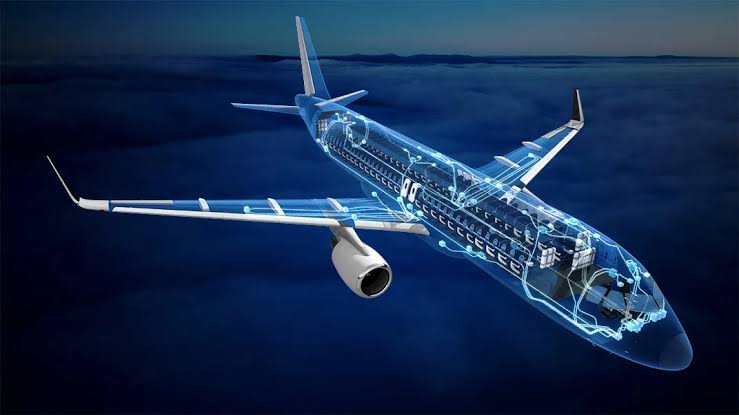
Aerospace manufacturing requires extremely precise components that must meet demanding requirements for performance, weight, durability, and reliability. 3D printing has become an important technology for aerospace companies because it provides engineers with greater freedom to create complex components while exploring opportunities for weight reduction and part consolidation. Additive manufacturing can produce geometries that may be difficult or expensive to create using conventional manufacturing techniques.
One of the major advantages of 3D printing for aerospace is design freedom. Engineers can create complex internal structures, optimized geometries, and lightweight components that are difficult to manufacture using traditional processes. In some applications, several traditionally separate components can potentially be redesigned as a single printed component. This can reduce the number of parts and simplify certain aspects of manufacturing and assembly.
Rapid prototyping is another important application. Aerospace engineers can produce test components and design iterations without waiting for lengthy tooling processes. This allows teams to evaluate designs earlier and make improvements during development. Because aerospace products often require extensive testing and engineering validation, the ability to iterate quickly can be valuable during the design process.
3D printing can also be useful for producing specialized tooling, fixtures, and replacement components. Instead of manufacturing every tool through a traditional process, aerospace organizations can use additive manufacturing to create specific tools when they are required. This can support more flexible production and maintenance workflows.
The aerospace industry demonstrates how 3D printing can go beyond simple prototyping. With continued advances in materials, printers, software, and manufacturing processes, additive manufacturing is becoming an increasingly important part of advanced engineering. Its combination of complex geometry, customization, lightweight design, and digital production makes it a powerful technology for the future of aerospace manufacturing.